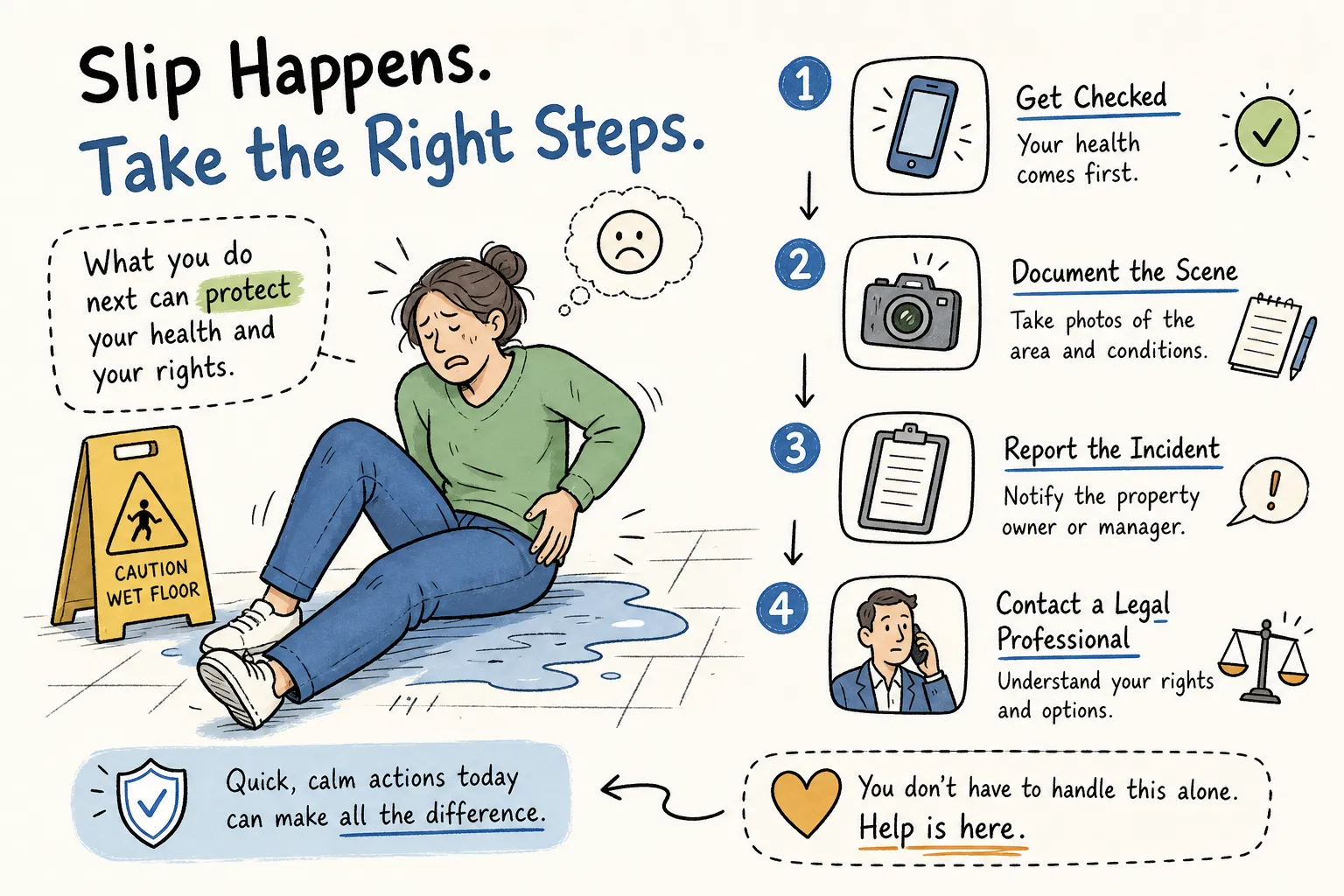
If you’re wondering what to do after a car accident, this 10-step checklist will walk you through exactly what to do, from the first seconds at the scene to the moment you speak with an attorney. The seconds after a crash feel surreal. Your heart is pounding, your hands are shaking, and your brain is trying to process what just happened while simultaneously fielding calls, dealing with the other driver, and figuring out what you’re supposed to do next. That disorientation is completely normal, and it’s also exactly when the most costly mistakes get made.
At Law Angels, we’ve spoken with hundreds of crash victims who did everything right medically but unknowingly handed the insurance company exactly what it needed to lowball their claim. They said the wrong thing at the scene. They waited a few days to see a doctor. They gave a recorded statement before anyone explained the risks. None of those decisions were reckless, they just didn’t know. That’s what this post-accident checklist is for.
The first 48 hours after a crash are the most critical window for both your health and your legal outcome. Insurance companies start building their file almost immediately, and the evidence you preserve in those first minutes can make or break what you recover. Think of this as the advice you’d get from a trusted attorney friend, broken into 10 clear steps you can actually follow in a chaotic moment.
What to do after a car accident: first minutes at the crash scene (steps 1, 3)
The sequence here matters more than most people realize. The instinct to jump out and confront the other driver, or to grab your phone and start calling people, can create real danger and real legal problems. Work through these steps in order before doing anything else.
Step 1: Stop the vehicle, check for injuries, and call 911
Do not leave the scene. Failing to stop or provide required information after a collision can be a crime in every state, though specific duties and thresholds vary by jurisdiction. Before you do anything else, check yourself and your passengers for injury, then check the occupants of the other vehicle. Even if no one appears hurt, call 911. A police report creates a formal, third-party record of the crash that insurers cannot simply dismiss, and many injuries don’t present obvious symptoms in the first few minutes.
In some minor fender-benders, local police departments won’t dispatch an officer. If that happens, ask the dispatcher how to file a self-report and write down exactly who you spoke with. That documentation still matters.
Step 2: Move to safety and activate your hazard lights
If the vehicles are drivable and it’s safe to do so, move them out of the flow of traffic. Secondary collisions are common, staying in a lane while traffic approaches is a real danger. Turn on your hazard lights immediately, and if you have emergency triangles or road flares in your vehicle, use them.
Move carefully and don’t go far. You want to preserve the general scene, not scatter debris across three lanes. A nearby parking lot or the road shoulder works well. Once you’re safe, stay with your vehicle until police arrive.
Step 3: What not to say or do at the scene
Several mistakes happen constantly at crash scenes, and all of them damage claims. Never apologize or say anything that sounds like an admission of fault, even casually, “I’m so sorry, I didn’t see you” feels like basic human decency, but it gets used against you. Never agree to skip the police report, even if the other driver seems friendly and suggests you just exchange information quietly.
Most importantly, avoid giving a recorded statement to anyone, including your own insurance company, before consulting an attorney. Many policies do require you to cooperate with your insurer, so rather than refusing outright, keep any initial statement to basic factual information and tell them you’ll follow up after you’ve spoken with counsel. This is the first place insurance pressure appears, and it often comes from someone who seems helpful and reasonable. The right response to a detailed recorded statement request is simple: “I’ll be in touch after I’ve spoken with an attorney.”
Accident scene documentation: collecting the evidence that wins claims (steps 4, 5)
Your phone is the most powerful claim tool you have in the first 20 minutes after a crash. The photos and information you gather before anyone leaves the scene cannot be recreated, and the difference between a thorough record and a thin one shows up directly in settlement negotiations.
Step 4: Document the scene with your phone
Start with wide establishing shots that show both vehicles, their positions relative to lanes, intersections, and any nearby landmarks. Then move to close-ups of every area of damage on both vehicles, including glass, deployed airbags, and fluid leaks. Photograph skid marks, road debris, traffic signals, stop signs, and lane markings. Capture the weather and lighting conditions as they actually are, not as you’d describe them later from memory.
If you can see visible injuries on yourself or your passengers, photograph those too. Look around for nearby businesses, traffic cameras, or ATMs that might have surveillance footage of the crash, and note their locations so footage can be requested before it’s overwritten. More photos are always better at this stage. You can sort through them later; you can’t go back and take them.
Step 5: Exchange information (and know exactly what to collect)
Get the following from the other driver: full legal name, phone number, driver’s license number, license plate number, insurance company name and policy number, and the vehicle’s VIN if you can access it. Don’t rely on a quick photo of an insurance card alone, confirm the policy is current and write down the policy number separately.
If there are witnesses, get their names and phone numbers right away, and ask them briefly what they saw while they’re still at the scene. Ask the responding officer for their name, badge number, and the report number so you can request the full report later. This information becomes the skeleton of your claim, so collect it carefully before anyone drives away.
The hours after you leave the scene (steps 6, 7)
This is where well-intentioned people make expensive mistakes. They feel shaken but okay, they’re relieved the crash wasn’t worse, and they tell themselves they’ll see a doctor if things get worse. That decision costs them.
Step 6: Get a medical evaluation, even if you feel okay
The most common delayed-injury symptoms after a crash include neck and back stiffness, headaches, dizziness, tingling or numbness in the limbs, nausea, fatigue, difficulty concentrating, and mood changes. Whiplash symptoms typically appear within 12 to 72 hours. Concussion effects can lag by 24 to 48 hours. Internal injuries can take days before they become obvious. Herniated discs sometimes don’t cause significant pain until weeks after the event.
See a doctor the same day or within 24 hours, even if you feel relatively fine. A same-day evaluation creates a medical record that directly links your injuries to the crash, documentation that personal injury claims rely on heavily. A gap in care, even a short one, is one of the first things insurance adjusters point to when arguing that your injuries aren’t serious or weren’t caused by the accident.
Step 7: Report the crash, crash reporting requirements vary by state
There are three separate reporting clocks running after any crash. For police, injury or death crashes typically require immediate notification. For your state’s DMV or transportation agency, most states require a report within 10 days when there is injury, death, or property damage above a set threshold. For your insurance company, your policy typically requires notice “as soon as practicable,” which in practice means 24 to 72 hours.
These rules vary by state, and Law Angels serves clients in Arizona, Colorado, Utah, and Texas where the specifics differ. Colorado requires reporting for any crash with property damage. Utah and Texas both set the threshold at property damage over $1,000. Arizona has its own ADOT reporting requirements when police weren’t present, check the current ADOT guidance or Arizona statutes for the applicable threshold, as it can vary depending on the type of filing. Don’t assume the rules are the same across state lines. A brief conversation with an attorney can clarify exactly what’s required in your jurisdiction, which connects directly to why early legal contact matters so much.
Protecting your claim in the first 48 hours (steps 8, 9)
The 48-hour window isn’t a waiting period. It’s an active phase where evidence is preserved or lost, memories are sharp or fading, and insurance companies are already building their file. These two steps are how you keep pace.
Step 8: Start a personal injury journal
A post-accident journal is a daily written record of your symptoms, pain levels, limitations on normal activities, missed work, and emotional impact. It sounds simple, but this contemporaneous record becomes powerful evidence in negotiations or litigation, it shows the real, day-to-day toll of the crash in your own words, logged in real time rather than reconstructed months later.
Start it the day of the crash. Write down everything you’re feeling physically and emotionally, what you couldn’t do that day, and any conversations you had with medical providers or insurance representatives. Keep it going until your treatment is complete. Detailed, consistent records maintained from the beginning carry significant weight with adjusters and courts alike, precisely because they’re harder to challenge than memory reconstructed after the fact.
Step 9: Recognize and resist early settlement pressure
Insurance adjusters are trained to move fast in the first 48 hours, before you have legal counsel, before you know the full scope of your injuries, and before you understand what your claim is actually worth. They call repeatedly, using a friendly and sympathetic tone. They request recorded statements under the guise of routine procedure. They make quick settlement offers that seem like a reasonable solution when you’re exhausted and in pain.
Accepting an early offer before your medical treatment is complete often means underestimating future medical costs and locking in a number that can’t be revisited. Once you sign a release, that’s it. The insurer knows you’re still figuring out your injuries, that’s the entire point of the early offer. If an adjuster calls, you don’t need to engage. The one sentence you need is: “I’ll be in touch after I’ve spoken with an attorney.”
Step 10: Talk to a personal injury attorney before you settle
You’ve secured the scene, gathered your evidence, started medical care, and protected yourself from early pressure. Now you have everything an attorney needs to give you a real evaluation of what your claim is worth. You owe it to yourself to understand that number before you accept anything.
Why the timing of this call matters
The first days after a crash are when the claim’s foundation is set. Evidence disappears. Surveillance footage gets overwritten. Memories blur. Insurance companies are already conducting recorded interviews, reviewing police reports, and calculating how little they can offer. An attorney who gets involved early can send preservation letters, advise you on what not to share, and evaluate your coverage and liability picture before any negotiation begins.
Waiting until you’re deep in negotiations, or until you’ve already accepted a settlement, eliminates most of your options. The call costs you nothing. Delaying it can cost you significantly.
How Law Angels makes this call different
When you call Law Angels at 844-THE-ANGELS, you get a substantive case evaluation from the attorneys who will actually handle your case, not a scripted intake interview. You receive a free, no-obligation consultation with no pressure and no upfront cost. That level of access from the start is not how most firms operate, and it makes a real difference in how your case gets built.
Law Angels operates on a contingency fee structure: you pay nothing unless your case is won. The firm serves clients across Arizona, Colorado, Utah, and Texas, with a focus on giving every client the personal attention their case deserves. The firm’s philosophy is clear: “You Heal While We Recover.” The legal side is handled so you can focus entirely on getting better.
Taking it one step at a time
Knowing what to do after a car accident, and moving through those steps in order, is what separates a protected claim from one that gets undervalued or dismissed. These 10 steps cover five phases: scene safety, evidence gathering, medical care, reporting, and legal consultation. None of them require legal training. They require awareness, a phone, and knowing what comes next.
The aftermath of a crash is overwhelming. The physical pain, the insurance calls, the paperwork, and the uncertainty about your financial future can feel like too much to carry. It doesn’t have to stay that way. You don’t have to figure this out alone, and you don’t have to accept the first number an insurance company puts in front of you.
If you’ve been in a crash and you’re unsure what to do after a car accident or what your next move is, Law Angels is ready to help. Call 844-THE-ANGELS for a free consultation. You heal. We recover.