Missing the deadline to file a personal injury lawsuit in Arizona doesn’t just delay your case. It ends it. Arizona courts will dismiss a claim filed even one day late, no matter how strong your evidence is or how serious your injuries were. That’s the reality of the personal injury statute of limitations in Arizona, and it’s a rule that injury victims in this state absolutely need to understand.
At Law Angels, we hear from injury victims across Arizona every single week who believe their window has already closed. Most of the time, it hasn’t. The two-year rule is real, but accrual dates, tolling exceptions, and the type of defendant involved can shift your timeline in ways that aren’t obvious without legal guidance. Before you assume you’ve lost your right to compensation, read what the law actually says.
Key takeaways:
- The personal injury statute of limitations in Arizona is two years under A.R.S. § 12-542 for most claims
- Government entity claims trigger a separate 180-day Notice of Claim requirement and a one-year lawsuit deadline
- Minors, mental incapacity, fraudulent concealment, and the discovery rule can all pause or shift when your clock starts
- Wrongful death claims run from the date of death, not the date of the original injury
- Missing any of these deadlines typically means losing your right to sue, permanently
Personal Injury Statute of Limitations in Arizona: The Two-Year Rule
What A.R.S. § 12-542 covers
Arizona’s governing statute is A.R.S. § 12-542, which requires most personal injury claims to be “commenced and prosecuted within two years after the cause of action accrues, and not afterward.” In plain terms: you have two years from the point your legal claim arises to file a lawsuit in court. That two-year rule covers the most common types of injury claims, including car accidents, slip and falls, bicycle crashes, and medical malpractice.
The statute also covers wrongful death claims, with accrual starting at the date of death rather than the date of the original injury. Trespass for injury to property and conversion of personal property fall under the same two-year window. For most injured Arizonans, the practical starting point is clear: two years from the day you were hurt.
Why this deadline is a hard cutoff, not a suggestion
The “and not afterward” language in the statute is not a technicality. Once the limitations period expires, Arizona courts will dismiss your case without evaluating the merits, a time bar courts apply consistently under A.R.S. § 12-542. A judge cannot simply overlook a missed deadline because your injuries were severe or because the other party’s negligence was obvious.
That said, exceptions do exist, and courts address them regularly, particularly in medical malpractice and latent-injury cases involving the discovery rule. The sections below explain when the two-year clock actually starts, what can pause it, and when an entirely different timeline applies altogether.
When Does the Two-Year Clock Actually Start?
The default rule: your injury date starts the timer
In most Arizona personal injury cases, the clock starts running on the day the injury occurs. A driver rear-ended on March 1, 2024, typically has until March 1, 2026, to file a lawsuit. A pedestrian injured in a slip and fall on a wet grocery store floor on June 15, 2025, has until June 15, 2027. For immediate, visible injuries, this calculation is usually straightforward.
The date you received medical treatment, filed an insurance claim, or hired an attorney is irrelevant to the statutory deadline. What matters is when the injury occurred, courts use the accident date, not a later event, which is why documenting the exact accident date from day one is so important.
The discovery rule: when harm isn’t immediately obvious
Arizona courts recognize the discovery rule for situations where the injury or its cause wasn’t apparent right away. Under this rule, accrual begins when the plaintiff discovered, or reasonably should have discovered with ordinary diligence, both the injury and its connection to the defendant’s conduct. This isn’t an automatic extension; your specific facts determine whether it applies.
The Arizona Supreme Court addressed this directly in Walk v. Ring, holding that a medical malpractice claim did not necessarily accrue at the time of surgery. Instead, the limitations period began when the plaintiff had reason to know the injury was caused by possible negligence. A patient who doesn’t realize a surgical error caused complications until months after the procedure may have their two-year window start at the point of reasonable discovery, not the date of the operation.
How the Personal Injury Statute of Limitations in Arizona Can Be Tolled
Injured minors and the tolling rule
Arizona tolls the statute of limitations entirely for plaintiffs who were under 18 when the injury occurred. The two-year clock does not start until the minor turns 18, which means it begins running on their 18th birthday. A 10-year-old injured in a car accident has until age 20 to file a lawsuit, not two years from the crash date.
A parent or guardian can still file a claim on the child’s behalf before the minor reaches 18, and in many cases doing so earlier protects evidence and strengthens the case. But the tolling rule ensures the minor’s right to sue is not forfeited simply because no adult filed in time.
Mental incapacity and unsound mind
Under A.R.S. § 12-502, if a plaintiff was legally of “unsound mind” when the claim accrued, the limitations period is tolled until that disability is removed. Arizona defines “unsound mind” as an inability to manage daily affairs or an inability to understand legal rights and liabilities. Proving either condition can qualify a plaintiff for tolling.
A formal declaration of incompetence isn’t required, but courts look for concrete evidence: medical records, physician testimony, and documented facts showing the level of impairment. The incapacity must also have existed at the time the cause of action accrued, not at some later point. Because the analysis is so fact-specific, speaking with an attorney before drawing any conclusions is essential.
Fraudulent concealment and defendant’s absence from Arizona
If the defendant actively concealed the wrongdoing or the cause of your injury, Arizona courts can toll the limitations period during the time the concealment lasted. The clock doesn’t run while a defendant hides the facts that would have alerted you to your right to sue. Similarly, if the defendant was absent from the state, A.R.S. § 12-501 provides that the limitations period may be suspended during that absence, though courts apply this narrowly.
These are narrower exceptions that courts scrutinize carefully. Documentation of the concealment and its timeline matters significantly. If you suspect the other party hid something that delayed your awareness of your claim, that’s a conversation to have with an attorney as soon as possible.
Government Entity Claims: A Shorter, Stricter Deadline
The 180-day notice of claim requirement
If your injury involved a government entity or a public employee, Arizona law imposes a separate and much tighter requirement. Before you can file a lawsuit, you must serve a written Notice of Claim within 180 days after the claim accrues under A.R.S. § 12-821.01. This is not optional; failing to serve the notice within that window bars your claim entirely.
The notice must include specific content to be valid: enough facts to identify the basis of liability, a specific settlement amount, and the supporting facts for that amount. A vague demand or an open-ended request for “all damages” is treated as defective, and courts have dismissed claims on that basis alone. Contact an attorney immediately if any government entity may have played a role in your injury.
The one-year lawsuit deadline under A.R.S. § 12-821
Separate from the notice requirement, A.R.S. § 12-821 imposes a one-year statute of limitations for the actual lawsuit against any public entity or public employee. Someone injured at a city-owned facility has 180 days to serve the Notice of Claim and one year to file the lawsuit; both deadlines are significantly shorter than what applies to private-party claims.
If a government vehicle, a public transit bus, a city-maintained sidewalk, or a public school employee was involved in your injury, your timeline is effectively cut in half compared to a standard personal injury case. Waiting even a few weeks can make the difference between a valid claim and a barred one.
Wrongful Death Claims and How the Timeline Differs
When the two-year wrongful death clock begins
Arizona wrongful death claims carry the same two-year statute of limitations under A.R.S. § 12-542, but the clock starts at the date of death, not the date of the original injury. If a victim was seriously injured on January 1 but passed away on March 1, the wrongful death deadline runs from March 1. The delay between injury and death does not shorten the filing window; it simply moves the starting point.
Under Arizona law, a wrongful death claim may be brought by the surviving spouse, children, or parents of the deceased. If none of those family members survive, the personal representative of the estate may bring the claim on behalf of the estate. The lawsuit is filed for the benefit of the statutory beneficiaries as a whole, not as individual separate claims.
Discovery rule and wrongful death
In some wrongful death cases, the connection between negligence and the death isn’t immediately apparent, particularly in situations involving medical error or delayed diagnosis. Arizona’s discovery rule can delay accrual until the family knew or reasonably should have known that negligence caused the death. A death certificate that lists natural causes, later discovered to reflect a misdiagnosis, may trigger this exception.
Families grieving a loss should not assume the two-year window has closed without speaking to an attorney, especially in cases involving medical care, medications, or circumstances where the cause of death was not immediately obvious. The analysis is fact-specific, and the stakes are too high to make that call without legal guidance.
What to Do Right Now if You’re Worried About Your Deadline
Steps to protect your claim before it’s too late
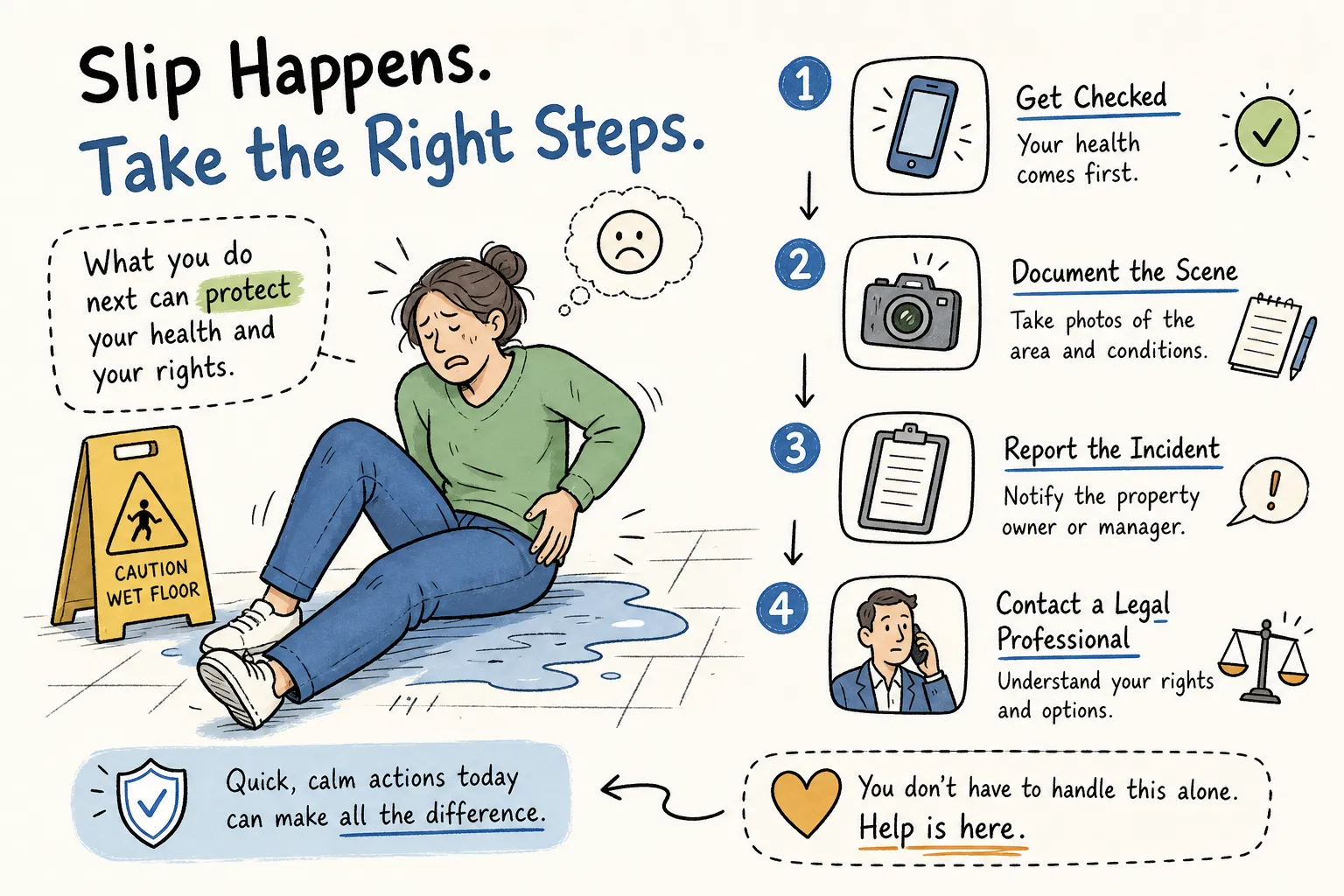
Start by documenting everything you can access today: photographs of the accident scene and your injuries, medical records, accident or incident reports, and any communications you’ve had with insurance companies or the other party. Write down a clear timeline while your memory is still fresh, including the exact date of the injury, when symptoms appeared, and when you first learned the cause of those symptoms.
- Preserve physical evidence: damaged clothing, vehicle photos, defective products, or anything connected to the incident
- Avoid giving recorded statements to insurance adjusters without legal guidance; these statements can be used to undercut your claim later
- Request copies of all medical records related to the injury and document every provider you’ve seen
How Law Angels helps Arizona injury victims clarify their deadline
At Law Angels, founders John Griffiths and Justin Johanson bring extensive experience navigating personal injury statute of limitations questions across Arizona, Colorado, Utah, and Texas. The firm’s approach is direct: when you reach out, you connect with the attorneys who will be working on your case, not a call center or a junior intake team.
Law Angels offers free, no-obligation consultations specifically to evaluate where you stand on Arizona’s filing timeline. The firm works on a contingency fee basis, so there is no upfront cost to get answers: you pay nothing unless your case is resolved in your favor. That commitment, combined with a deliberately focused caseload, means every client receives the thorough, personalized attention their case deserves.
If you’re unsure whether your deadline has passed, don’t guess. Call 844-THE-ANGELS or submit a consultation request online, it costs nothing to find out where you stand.
The Deadline Is Real, But So Is the Guidance Available to You
The personal injury statute of limitations in Arizona is two years under A.R.S. § 12-542, but accrual dates, tolling rules, the discovery rule, and the type of defendant involved can all shift that timeline in ways that aren’t always obvious. Government entity claims come with stricter deadlines. Minors and those with mental incapacity may have more time. Wrongful death claims start running at a different point entirely.
The analysis is too fact-specific to work through on your own, and the consequences of getting it wrong are permanent. If you think the personal injury statute of limitations in Arizona may affect your claim, don’t make a final decision based on a rough calendar calculation when the exceptions to the two-year rule could change everything.
You focus on healing. Let us figure out where your deadline stands. Reach out to Law Angels today at 844-THE-ANGELS or submit a consultation request online. There’s no fee to find out whether your claim is still alive, and there’s no obligation to move forward until you’re ready.